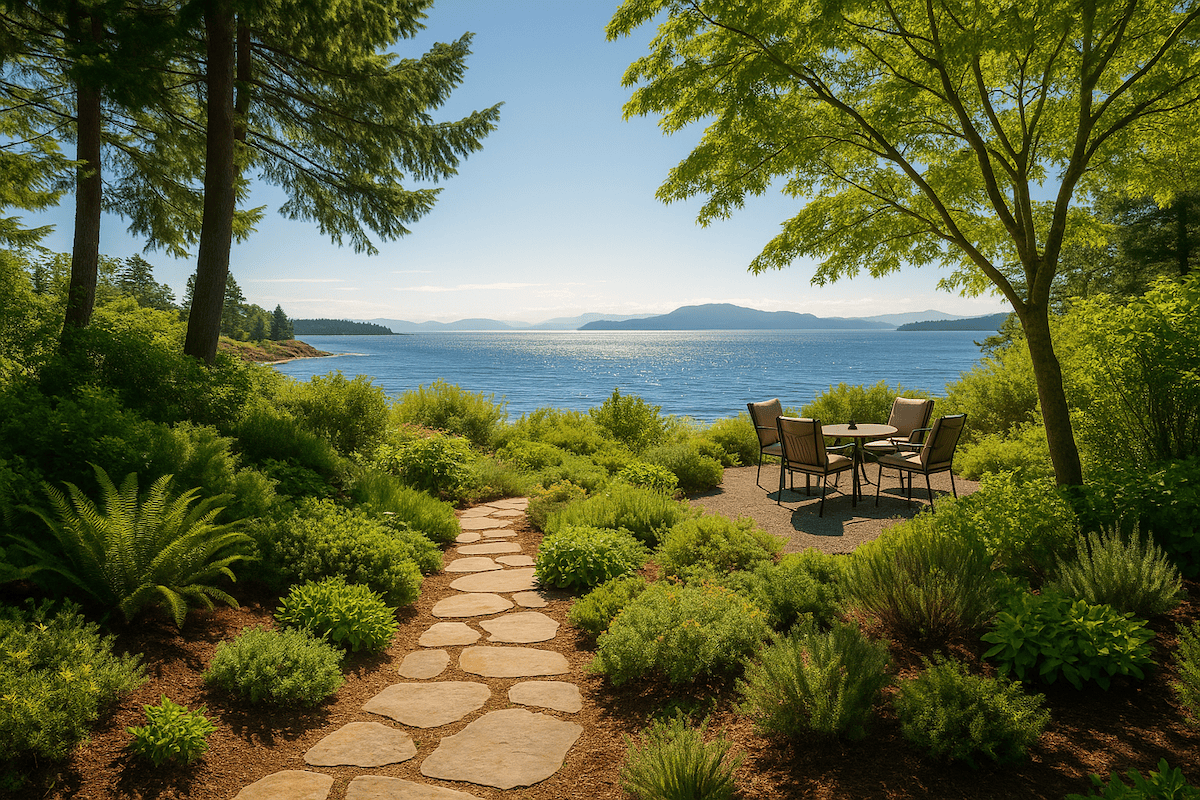
Hey, fellow islanders! There’s nothing quite like looking out your window in Nanaimo and seeing a beautiful outdoor space that feels like a true extension of your home. Whether it’s a vibrant, colorful garden, a serene patio perfect for an evening barbecue, or a tidy front yard that makes you proud every time you pull into the driveway, our yards are a big part of what makes living here so special.
But let’s be real, cultivating that perfect space on Vancouver Island isn’t always a walk in the park. Our unique “rain shadow” climate means we get less rainfall than other parts of the coast, leading to dry, sometimes challenging summers. We’ve got sloped yards in Departure Bay, rocky ground in Chase River, and a healthy population of deer that see our hard work as a personal salad bar. Juggling all of this on top of our busy lives can feel like a full-time job.
That’s where a professional landscaping service comes in. They’re not just for the big-budget renovations; they’re the local experts who understand our unique challenges and can turn your outdoor space into a manageable, beautiful oasis. This guide will walk you through everything you need to know about hiring a top-tier landscaping company right here in Nanaimo, focusing on enhancing your curb appeal, designing a functional and beautiful garden, and keeping it all looking fantastic with ongoing maintenance.
The First Impression: Enhancing Your Curb Appeal
They say you only get one chance to make a first impression, and for a home, that’s your curb appeal. It’s not just about looking good; it’s about adding real value to your property and welcoming you and your guests home. A professional landscaper can take your home’s exterior from “meh” to “wow” with a few key services.
Here are some of the most impactful ways local landscapers can boost your home’s exterior:
- Lawn Care and Revitalization: A lush, green lawn is the foundation of a great-looking yard. Services like sod installation, aeration, and regular fertilizing can breathe new life into a tired lawn. They’ll also handle weed control, so you’re not battling stubborn dandelions all summer.
- Pruning and Hedging: You might not think much about it, but a professional’s touch can make all the difference. Meticulously trimmed hedges and strategically pruned shrubs give your entire property a clean, polished look. This isn’t just about aesthetics—it promotes plant health and growth.
- Hardscaping Elements: Our Nanaimo properties often have challenging terrain, but hardscaping can turn a problem area into a stunning feature. These are the non-living parts of your landscape that provide structure and elegance.
- Paver Walkways and Stone Paths: They guide visitors and add a touch of timeless charm.
- Garden Borders and Retaining Walls: Essential for preventing erosion on our hilly properties while creating attractive, defined garden beds.
- Decorative Rock and Gravel Beds: A fantastic, low-maintenance way to add texture and visual interest while also being water-wise.
Before you meet with a potential landscaper, it’s a great idea to make a quick “curb appeal checklist.” Think about what you’d like to improve. Does your lawn need attention? Are your hedges overgrown? Do you want a new pathway to your front door? Having these ideas ready will make the consultation much more productive.
Designing Your Dream Garden (More Than Just Plants)
Creating a garden that you truly love is about more than just picking pretty flowers. A great landscape design balances aesthetics with functionality, making your space work for your lifestyle and our unique Nanaimo climate. The best local designers understand our region’s specific needs and challenges.
Important Design Considerations in Nanaimo:
- Climate-Conscious Plant Selection: With our famously dry summers, choosing the right plants is a game-changer. Landscapers will often recommend drought-tolerant species that thrive with minimal irrigation once established. They also know how to manage the moss that takes over shaded areas during our wet winters.
- Deer-Resistant Design: We all love our local wildlife, but we don’t want them feasting on our prize-winning petunias. Experienced landscapers have a wealth of knowledge about which plants deer tend to avoid, so you can have a beautiful garden without constantly fighting off your four-legged neighbors.
- Soil and Drainage: Before a single plant goes into the ground, a professional will analyze your soil. They know how to enrich the ground or address poor drainage to ensure your plants have the best chance to flourish. This is especially important given the varying soil conditions from the rich Chase River valley to the rocky slopes of Departure Bay.
Choosing the right design can be overwhelming, so here is a comparison of two popular design choices to get you started:
| Design Style | Pros | Cons |
|---|---|---|
| Traditional English Garden | Formal, structured look. Uses a variety of flowers and perennials. Perfect for a classic, romantic feel. | High maintenance, often requires significant watering and care, susceptible to deer. |
| West Coast Naturalistic | Low maintenance, uses native plants that are well-suited to the climate. Attracts native pollinators and birds. | Can appear less “manicured.” Requires expertise in selecting native species to ensure year-round interest. |
Of course, the most important part of the design process is the consultation. A good landscaper will take the time to understand your vision, your budget, and how you want to use the space, creating a personalized plan that’s just right for you.
The Long Game: Ongoing Maintenance Services
A beautiful landscape is an investment, and like any investment, it needs to be protected with consistent care. While some of us have a green thumb and love spending hours in the garden, others prefer to enjoy their free time elsewhere. That’s where ongoing maintenance comes in, ensuring your yard stays beautiful and healthy all year long.
Landscaping companies offer a variety of maintenance plans to suit every need. These services are invaluable for managing our Nanaimo seasons.
- Regular, Seasonal Packages: These are typically weekly or bi-weekly visits that cover the basics: mowing, weeding, trimming, and fertilizing. This kind of consistent care keeps your yard tidy and prevents small problems from becoming big ones.
- Seasonal Clean-Ups: Our spring and fall clean-ups are crucial. In the spring, crews will remove winter debris and prune plants to prepare them for the growing season. In the autumn, they’ll tackle our famous leaf fall from Big Leaf Maples, getting your yard ready for the wet winter.
- Irrigation System Maintenance: With summer water restrictions, a well-maintained irrigation system is more important than ever. Landscapers can design, install, and service systems that are efficient and water-wise, ensuring your garden gets the hydration it needs without waste.
You might be asking yourself, “Can’t I just do it myself?” Of course you can! But a professional service frees up your valuable time, guarantees the job is done correctly, and brings an expert eye to spot potential issues before they cause damage.
How to Choose Your Nanaimo Landscaping Pro
Finding the right team to trust with your outdoor space is a critical step. A great landscaping company is more than just a crew with a lawnmower; they’re partners in bringing your vision to life. Here’s a checklist to help you find the perfect fit.
- Portfolio and Reviews: This is your first and most important step. Check out their past work. Does their style match what you’re looking for? Are there positive testimonials from other Nanaimo homeowners? Look for reviews on sites like Houzz or the Better Business Bureau.
- Licensing and Insurance: Always, always confirm that a company is fully licensed, insured, and covered by WorkSafeBC. This protects you in the event of an accident or unexpected issues. A reputable company will be happy to provide this information.
- Detailed Estimates: The best companies will provide a clear, written estimate that outlines all costs upfront. Be wary of anyone who gives you a vague quote or demands a large down payment without a detailed plan.
- Local Knowledge: Ask them specific questions about Nanaimo’s unique challenges. Do they have experience with deer-resistant planting or managing sloped yards? Their answers will tell you a lot about their expertise.
- Communication: Pay attention to how they communicate from the first phone call. Are they responsive, friendly, and willing to answer all your questions? A good working relationship starts with good communication.
As you begin your search, you might also want to check out some local resources for inspiration. For instance, you could find beautiful options for your home by visiting our Our Favourite Nanaimo Nurseries page, or learn more about sustainable gardening practices on our Water-Wise Gardening page. You may also want to check our Nanaimo Real Estate Guide to see how an improved landscape can increase the value of your home.
Cultivate Your Perfect Space
From the charming character homes of the Old City Quarter to the modern residences of North Nanaimo, every property has the potential to be a stunning outdoor paradise. Navigating our island’s unique climate and terrain doesn’t have to be a challenge when you partner with a local expert who knows our city inside and out.
The right landscaper can help you create a beautiful, functional, and easily maintained space that you’ll love for years to come. So go ahead, start your search, and take the first step toward cultivating the outdoor oasis you’ve always dreamed of.